It’s not Perugia. It’s not San Gimignano. It’s not one of those picture-perfect villages that look like they’ve been staged for tourists.
Santarcangelo di Romagna is something else. It’s alive. Rough. Real.
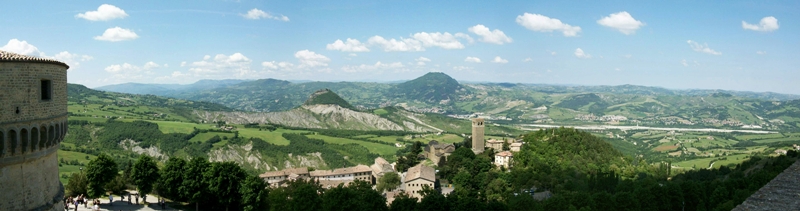
Ten kilometres from Rimini, just past the Rubicon, and the world changes. The Riviera stays down there with its noise of waves and pedal boats. Here you go up. Monte Giove is only ninety metres, but when you reach the top — when you set foot in Piazza Ganganelli — you feel like you’re on a viewpoint overlooking half the Apennines.
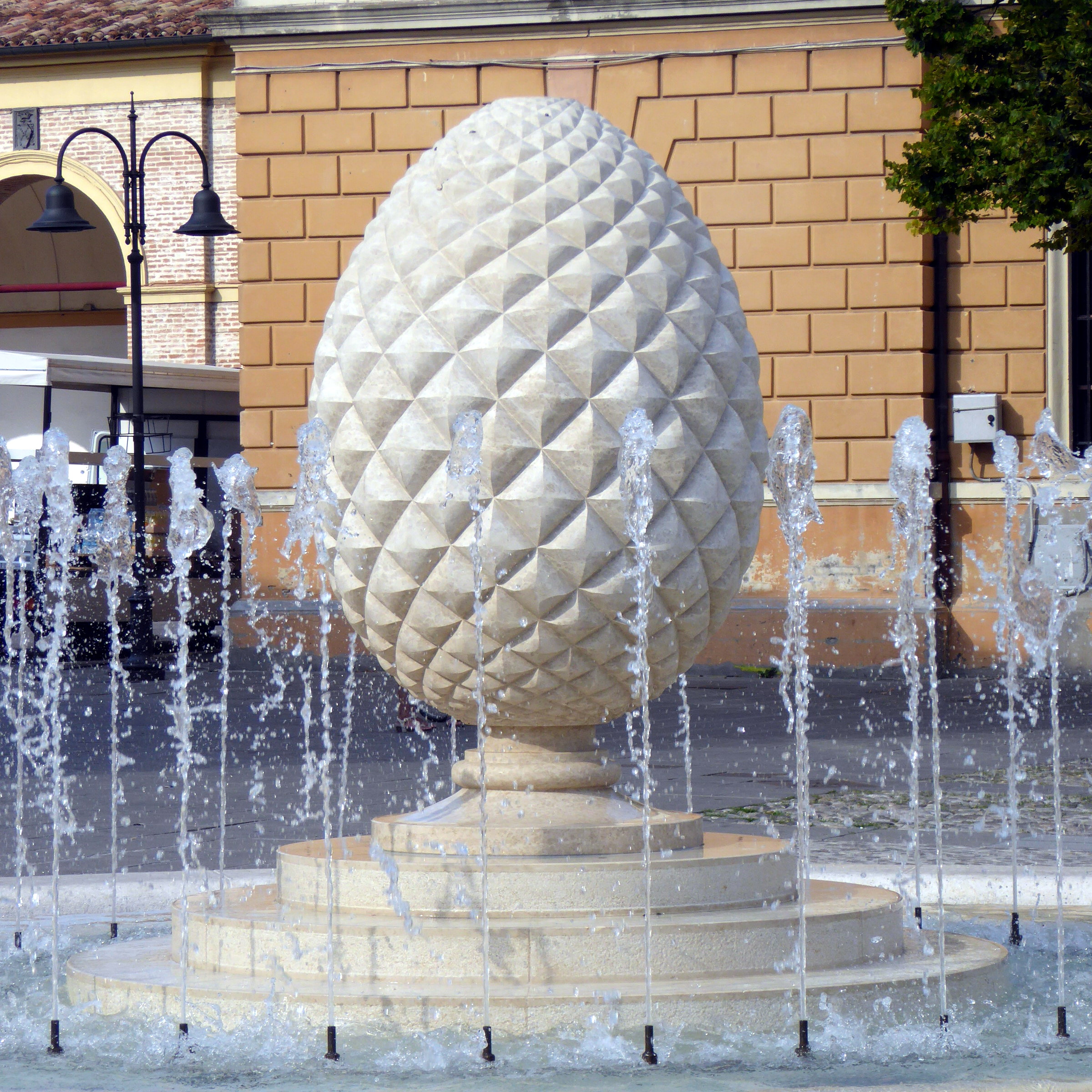
The first sister: Piazza Ganganelli
This is the elegant living room. The one you imagine when you think “village square in Romagna”.
In the centre, a 16th-century fountain with a stone pinecone — a symbol of abundance, but also a reminder of when the Roman aqueduct passed through here. Around it, stately palaces and the Ganganelli Arch, dedicated to Pope Clement XIV, whose surname was Ganganelli. A pope from Santarcangelo, not just anyone.
Under the arch, the natural passage to the medieval heart. That’s where the town reveals itself.
Piazza Beato Simone Balacchi: the square of stories on the walls
The second square is more intimate. More contained. Here is the Collegiate Church, dedicated to Saint Michael the Archangel — patron saint of the town, feast day 29 September, when all of Santarcangelo stops for the fair.
But the real beauty is something else.
A few steps away, nestled among the houses, is the Piazzetta del Vitellone. They call it that — the big calf — because of the 19th-century fountain shaped like a bull. But the real name is another story: it’s the vitellone of Fellini, the monument to the provincial boy who dreams of the city. Fellini, who often came to Santarcangelo, who shot scenes from I Vitelloni and Amarcord here, who loved these streets and these taverns.
The fountain is not a masterpiece of art. But it’s authentic. It’s Romagna.
Piazza della Libertà: the square that never sleeps
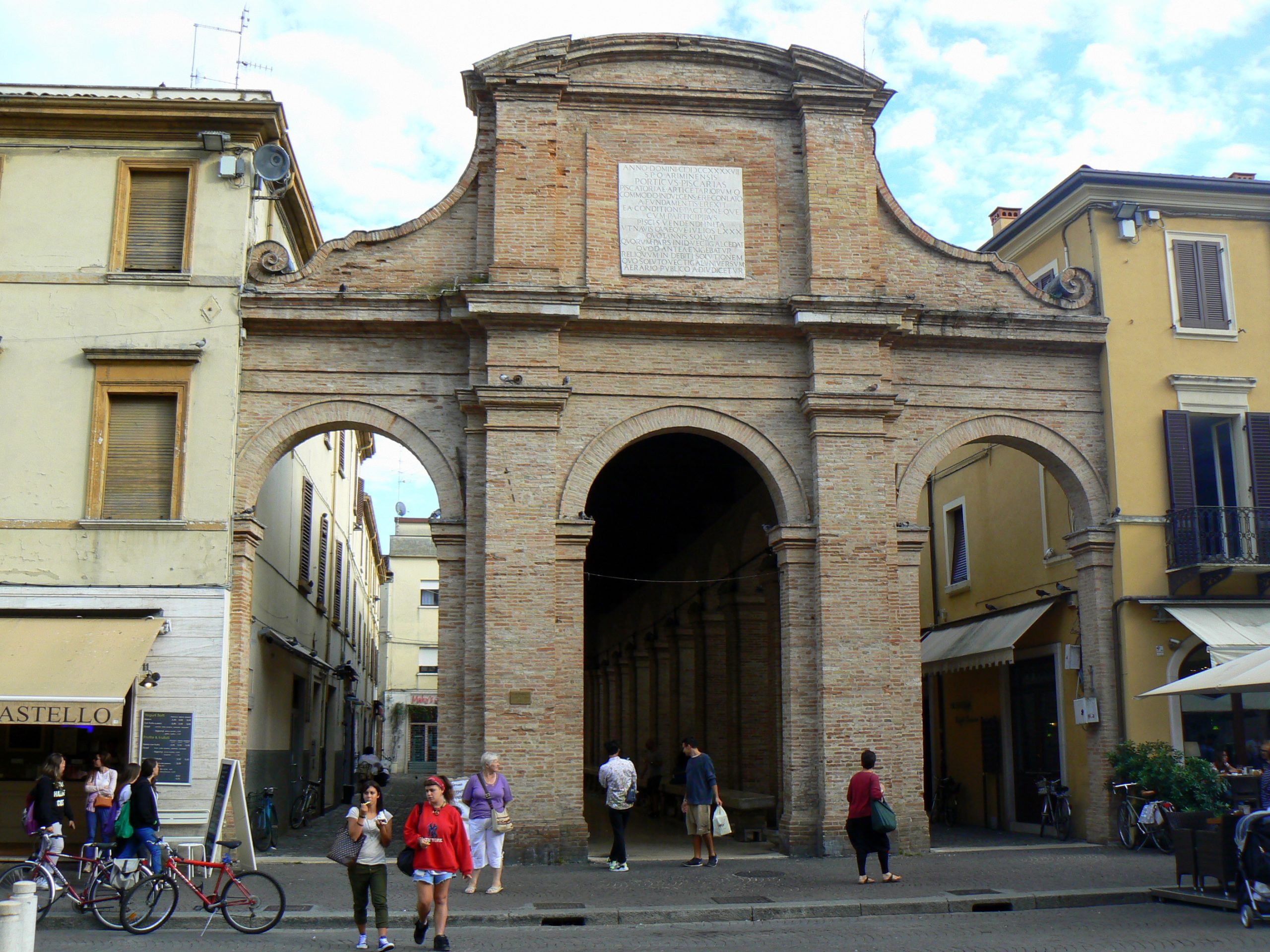
Third square, third character. This is the popular one. The one with the Wednesday market, the bars open late, the old men playing cards under the porticoes.
The Civic Tower rises above everything, bell included. At the top, a clock that has been striking the hours for five centuries. When it chimes, you hear it throughout the entire village. It never stops. Not even at Christmas.
This is where you really see Santarcangelo’s life. Not in the monuments — in the gestures. In the fish stall on Wednesday morning. In the coffee drunk standing up, in a hurry. In the children chasing pigeons among the tables.
Seven churches: a journey in faith and art (on foot)
Seven. You count seven in the historic centre. It’s not a record, it’s an embrace.
Start at the Collegiate Church of San Michele — sober, 18th-century, with an interior that surprises with its light and proportions. Then head down to the Sanctuary of the Vergine del Carmine, smaller, more intimate, where candles are always burning. A little further on, the Church of San Girolamo, which houses a wooden crucifix from the 1300s.
And then Sant’Agostino. And San Francesco. And Santa Maria degli Angeli. And Sant’Antonio.
You don’t need to be a believer. Just enter, breathe in the silence, look at a fresco without rushing. Each church tells a piece of the village’s history, a shift in power, a popular devotion that comes from afar.
My advice: choose three and visit them calmly. Save the fourth for next time. Like the book you don’t want to finish.
Artisan workshops: hands that still know how to make
Because Santarcangelo is not just history. It’s also — above all — living work.
Artisan workshops that resist homogenisation. Wood, wrought iron, ceramics. Shops where you walk in and smell sawdust and varnish, where the owner is called by name, where he tells you about the technique he learned from his father.
One in particular, on via della Genga: a raku ceramics workshop. Japanese firing applied to Romagna clay. The contrast is beautiful — ancient East meeting the clay of the Marecchia. If you pass by, go in. Tell them Cristian sent you. They don’t know who I am, but they’ll smile anyway.
The “written” piadina and taverns under the porticoes
It’s not just any piadina. It’s “written”, because once the marks left by cooking on the stone looked like letters. Or maybe because it is written in the DNA of this land, who knows.
The real Romagna piadina here is still the real one: thin, crunchy, with that fragrant lard and the right flour. It’s eaten hot. There’s no “takeaway” — there’s “walking piadina”, which is different. You eat it while walking under the porticoes of Piazza della Libertà, and those are the most authentic porticoes in the province.
If you’re planning a holiday in Rimini
Download the free mini guide with 7 corners to see in Rimini.
And then the taverns. There are about ten under the porticoes, each with its specialty. The one with passatelli in broth, the one with sfogliata crescia, the one where they pour Sangiovese wine from a flask, without a label, the way it used to be done.
The ritual is always the same: you walk in, look at the counter, choose a wooden table, order something simple. You don’t ask for the menu — you ask “what’s there today”.
And they tell you.
A walking itinerary (if you have two hours)
Here’s how to experience Santarcangelo in a morning or an afternoon:
Start: Park at the bottom of the hill. Santarcangelo has a ZTL in the historic centre, but the shuttle car parks work well.
First stop: Piazza Ganganelli. Walk up via Garibaldi (or via della Genga, more scenic). Time: 10 minutes, but stop to look at the view every now and then — it gets better at every curve.
Second stop: Piazza Beato Simone Balacchi and the Collegiate Church. Go in, stay 5 minutes in silence. Then go down to the Piazzetta del Vitellone for the obligatory photo.
Third stop: Via delle Botteghe — via della Genga and via IV Novembre. Go into at least one workshop.
Fourth stop: Piazza della Libertà. Sit down. Get something. Don’t rush.
Fifth stop: One of the smaller churches. Sant’Agostino is my favourite for its quiet atmosphere.
Closing: “Written” piadina under the porticoes. If it’s dinner time, choose a tavern at random. It almost always works.
Why Santarcangelo is not “the usual village”
Because it’s real.
Because there’s no entrance fee. Because there’s no obligatory route. Because you can walk into a church and find the cleaning lady smiling at you, without asking for anything. Because the big bell still strikes the hours and people set their clocks by it.
Because Santarcangelo is Romagna: it doesn’t introduce itself, it doesn’t sell itself. It lives.
Some say it’s the most beautiful village in the province of Rimini. Maybe it’s true. But beyond the ranking — which we Romagnoli only like to argue about — Santarcangelo has a rare gift: it never disappoints.
Pair with: Discover Fellini and Gambettola and the Mora Romagnola.
Frequently asked questions about Santarcangelo di Romagna
Where is Santarcangelo di Romagna?
Santarcangelo di Romagna is 10 km from Rimini, along the Via Emilia towards Cesena. It is the first town in the province of Rimini after the border with Forlì-Cesena.
What are the three main squares of Santarcangelo?
Piazza Ganganelli (the highest, heart of the village), Piazza Beato Simone Balacchi (with the Collegiate Church and Piazzetta del Vitellone), and Piazza della Libertà (the liveliest, with market and porticoes).
What to see in Santarcangelo in one day?
The three squares, the Collegiate Church of San Michele, the Ganganelli Arch, at least one artisan workshop, and a “written” piadina under the porticoes. If you have time, visit one of the tuff caves underground by reservation.
When is the market in Santarcangelo?
The weekly market is held on Wednesday morning in Piazza della Libertà and surrounding streets. The Fair of San Michele is on 29 September, with the whole town celebrating.
Can you visit Santarcangelo with children?
Yes, the centre is pedestrianised and safe. Children love the Piazzetta del Vitellone (with the bull fountain) and the medieval alleyways. The shuttle car parks are convenient for families.
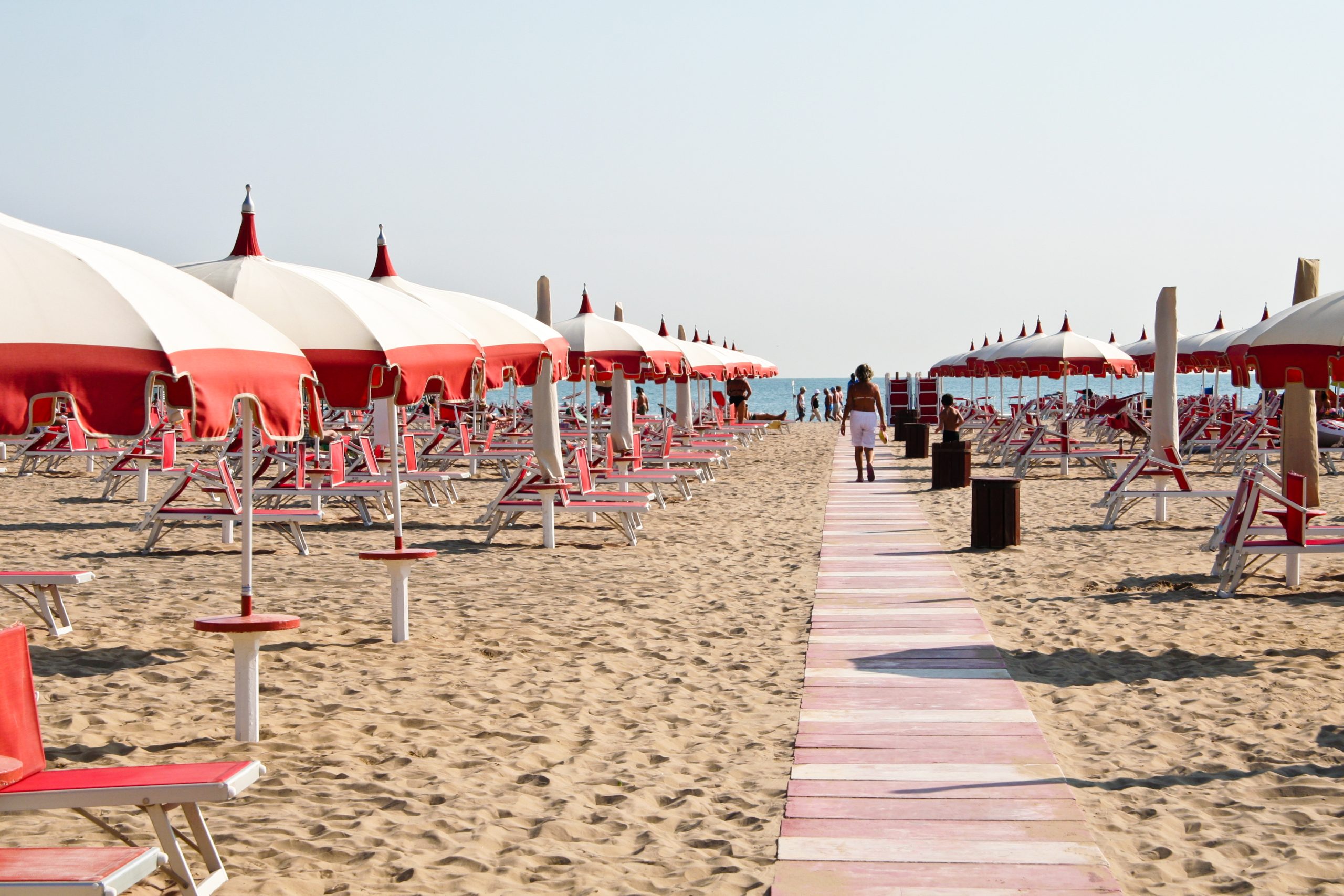
If you’re passing through these parts, if you want to breathe the real Romagna that is not just umbrellas and nightclubs, give me a shout. I’m ten minutes away by car.
You know where to find me. At the Aqua Hotel.