It’s seven in the morning.
The air still has that coolness that doesn’t last long in June. I leave the house, cross the avenue. Twenty steps and I’m already inside.
Grass. White poplars as tall as buildings. A gray heron still on the water as if it had all the time in the world.
I think of Central Park every time. Not because it’s the same — it’s not. But because it works the same way: a green parenthesis in the middle of a city that never stops. The place where New Yorkers run, walk their dogs, read on a blanket. The place where you stop being in a hurry.
Rimini has this place.
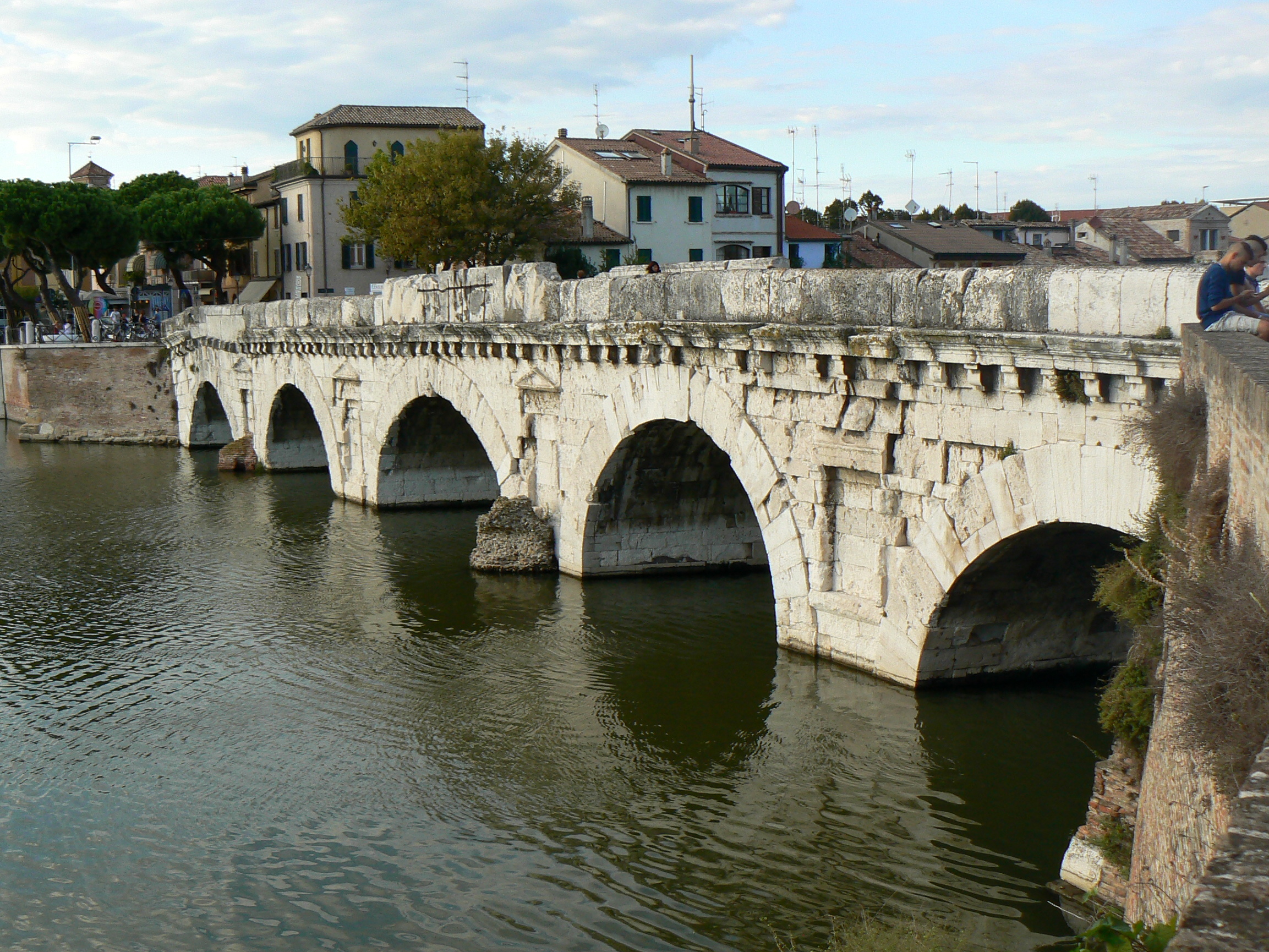
Not everyone knows it. Tourists who arrive in August look at the sea, and they do it perfectly well. But there’s a 23-hectare park, 10 minutes from the beach, overlooking a Roman bridge from 14 AD, built on the bed of a river that one day changed its mind and stopped flowing here.
It’s called Parco Marecchia.
And on at least three fundamental things — three things that really matter — it beats Central Park.
The same function, a completely different story
Central Park has 341 hectares. Parco Marecchia has 23.
The race is lost from the start. But it’s not a race.
The idea is the same: to give back to the city a space where you can stop being in a hurry. Frederick Law Olmsted opened Central Park in 1858 with a declared vision, almost a manifesto: the industrial city needed a lung, a place where modern man could feel human again. An urban revolution. A visionary project with a signature and inauguration.
Parco Marecchia opened in the 70s. No manifesto. No project with a famous name. The Comune di Rimini simply took the abandoned bed of the Marecchia river — which had stopped flowing here in the 1930s — and transformed it into public green space.
Less dramatic. Just as necessary.
Because the function is identical.
In the morning, you’ll find runners. In the afternoon, families with children. In the evening, couples walking aimlessly. On weekends, cyclists who start from here with their gravel bikes and ride up the Valmarecchia for dozens of kilometers.
Same energy, same vocation, same reason for its existence.
But Central Park was designed on granite rock with soil brought in from elsewhere. Parco Marecchia is different: it’s a place that already had a history before someone decided to make it a park. And that history changes everything.
Where to relax in Rimini away from the beach (and almost no one thinks of it)
The average tourist in Rimini follows a precise path.
Beach. Swim. Piadina. Historic center. Piazza Tre Martiri. Arch of Augustus. Aperitif. Disco if they’re the type.
Parco Marecchia almost never appears in this itinerary.
Mistake.
Not because it’s better than the beach — the beach is the beach, it’s why Rimini has existed as a tourist destination for a hundred years. But there’s a moment in every vacation — usually on the third day, usually in the afternoon — when you need something different. Green. Relative silence. To walk on grass instead of sand.
Parco Marecchia is that place.
Free access, always open, no ticket. According to official data from the Comune di Rimini, the park covers 234,790 square meters. Equipped play areas for children. A dedicated, fenced, safe dog enclosure. Cycle paths. A Piazza sull’acqua — the so-called Piazza sull’acqua — with a direct view of the Ponte di Tiberio.
And a 10-minute walk away, the Adriatic.
Central Park is about 16 kilometers from the ocean. Here you leave the park, take Viale Tiberio and in 10 minutes you have your feet in the water.
This is the first advantage. But it’s not the most important.
Under these meadows a river once flowed
The Marecchia river originates in the Tuscan-Romagnolo Apennines, flows for over 70 kilometers through the Valmarecchia and reaches the sea.
For centuries, its mouth was here. Right where you walk when you cross the park.
Then, in the 1930s, the river was diverted north. Hydraulic, urban, and reclamation reasons. The new course was traced further upstream than the current mouth, near the airport. The old riverbed — the natural bed where water had carved for millennia — remained dry.
The city took it and planted trees.
The white poplars, black poplars, white willows, and wild blackthorns you see today: they weren’t chosen by a landscape architect with a catalog in hand. They’re there because that soil still remembers being a riverbed. It’s riparian vegetation — what grows naturally near water. It took root here because the land allowed it.
When you walk in Parco Marecchia, you’re walking on water that once was.
In recent decades, the park has also become an ecological corridor: one of the few continuous green strips connecting the hinterland to the sea in the urban fabric of Rimini. Grey herons nest there. European honey buzzards pass through during migration. Coots frequent the stretch of water remaining near the bridge.
It’s not romanticism. It’s ecology.
Central Park has this quality artificially. Parco Marecchia has it by history.
155 stones waiting to return home
In the 1st century AD, Emperor Augustus began the construction of a bridge over the Marecchia. He died before seeing it finished. His adopted son Tiberius completed it between 14 and 21 AD.
The result is the Ponte di Tiberio: 73 meters long, 8.5 meters wide, five arches in blocks of white Istrian stone. The stone had been transported by sea from the Istrian peninsula, along the Adriatic coast, to Rimini — then Ariminum, a fundamental hub of the Roman road network.
Almost two thousand years later, the bridge is still there. Still passable. Still solid.
But over the centuries something had been lost.
During excavations in the 1990s in the Marecchia riverbed — in that same bed that then became a park — Comune di Rimini technicians found 155 fragments of worked stone. Blocks, ashlar, pieces of cornice. Materials that had slipped into the water during some ancient collapse: a flood, a medieval siege, the slow wear and tear of time.
They cataloged them. They brought them up. They kept them in storage for years.
Then, in May 2016, the Comune di Rimini began work on the archaeological park “Le pietre raccontano” (The stones tell their story). The 155 Roman stones returned to the open air, in the area adjacent to the basin of the Ponte di Tiberio, an integral part of Parco Marecchia.
Not rebuilt. Not reassembled on the bridge. Exposed as they are: with hand-worked surfaces, Roman site marks, traces of a craft that lasted for generations.
Each block shows how the builders of the 1st century AD worked the stone, how they transported it, how they put it in place. They are a manual of Roman construction technique open to the air, with the Ponte di Tiberio in the background — the original monument from which those fragments fell.
You go from the dog enclosure to the Roman artifact in a three-minute walk.
In New York, the closest Roman artifact is at the Metropolitan Museum of Art, protected by a glass case.

The park as a gateway to the hinterland
There’s something you don’t expect from Parco Marecchia.
You arrive to spend an afternoon. And you discover that from there you can embark on a journey.
The Marecchia cycle path begins from the park: a route of about 80 kilometers that goes up the river from the Adriatic to Novafeltria and Saiano, in the heart of the Romagnolo Apennines. It follows the valley floor, crosses the Valmarecchia, touching one by one the medieval villages that most tourists never see.
Verucchio, perched on its rocky spur with its Malatesta fortress. Torriana, with the castle overlooking the valley from above as if still standing guard. Montebello, with the legend of Azzurrina keeping a popular story alive for centuries. San Leo, the fortress that hosted Cagliostro as a prisoner and that Napoleon Bonaparte considered impregnable.
All this starts from Parco Marecchia.
You don’t have to rent a car. You don’t have to take a highway. You put on the right shoes, get out your bike, and pedal. The river takes you where you want to go.
In spring and autumn, when the bathing season is over or hasn’t yet begun, the park transforms into the starting point for days that remain in your mind. Serious cyclists start at dawn. Families arrive with cargo bikes loaded with children. German tourists — who understand bikes — use it as a base for the whole week.
Rimini is not just the sea. Parco Marecchia is the door through which the hinterland enters.
July 2007: forty thousand people and a night Rimini hasn’t forgotten
On July 22, 2007, Parco Marecchia disappeared under the crowd.
It was no longer a park. It was a sea of people.
Forty thousand — that’s the figure reported by the press at the time — had gathered there for the Coca Cola Live@MTV Tour. On stage, Ricky Martin. Behind him, the illuminated Ponte di Tiberio. On MTV, live coverage from 9 pm onwards, hosted by Alessandro Cattelan and Carolina Di Domenico.
Italy was watching. Rimini was live on a European channel.
Forty thousand people in 23 hectares. About 17 people per 100 square meters. It wasn’t a lazy afternoon crowd — it was a real concert, with the energy that only certain places and certain moments can generate.
Before Ricky Martin, L’Aura and Zero Assoluto opened the stage. Then he entered, and for an hour the Marecchia became the most watched place in Italy.
That night says one precise thing: this park is just the right size. Not too small to be peripheral, not so big as to disperse the crowd. It’s a space with a shape — with recognizable edges, with a fixed landmark, with that Piazza sull’acqua and that Roman bridge that always remind you where you are.
Even when there are forty thousand people and the music covers everything else.
Normal life: what you find when you come without expectations
It’s not always an epic scene.
Most days at Parco Marecchia this happens: someone walks their dog. A woman runs with headphones. Two children argue about who gets to use the swing. A boy studies sitting on the grass with his laptop on his knees. An old man reads the newspaper on a bench.
Normal life.
And that’s exactly the most precious thing.
Urban parks aren’t valuable for big occasions. They’re valuable for the sum of all the small ordinary occasions. For the fact that every day someone returns, not because there’s anything special, but because it’s nice to be there.
The real test of a park isn’t whether it looks good in photographs. It’s whether people return to it when there’s no special reason to.
At Parco Marecchia, they return.
For children there’s the equipped play area, with structures and space to run. For dogs there’s the dedicated enclosure: fenced, safe, large enough to allow freedom of movement without taking off the leash. For cyclists there’s the starting point of the route towards the Valmarecchia. For those who just want to sit and look at the water, there’s the Piazza sull’acqua with the Ponte di Tiberio in front.
And for those who arrive without a plan — what to do? — there’s always the simplest answer: sit down and let the afternoon pass.
In Rimini, what seems like doing nothing always has something to give you.
What you feel when you’re there
There’s a specific moment, at Parco Marecchia, that convinces everyone.
It’s when you stop near the water and look at the Ponte di Tiberio.
The bridge has been there since 14 AD. It has seen Roman legionaries pass, medieval merchants, Jubilee pilgrims, 20th-century tourists, today’s kids with phones in hand. It has resisted floods, sieges, World War II bombings.
And now it’s your backdrop.
There’s no loudspeaker telling you the story in a museum voice. There’s no sign with 400 words to read standing in the sun. There’s no ticket.
You’re there, and it’s there, and between you there are almost two thousand years of history resting on the water as if it were the most normal thing in the world.
In Rimini, it is.
History is not kept in display cases. It’s in the air, it’s in the bricks, it’s in the bridge you cross to go to the bar. Parco Marecchia is not just urban green space: it’s the place where Rimini tells you about itself without raising its voice.
This is why every morning, leaving the house, I take those twenty steps and enter.
I don’t need a special reason. It’s already there.
Practical information
Official name: Parco Marecchia (also known as Parco XXV Aprile)
Address: Viale Tiberio, Ponte di Tiberio area, Marina Centro — Rimini 47914
Access: free, no closing times
Area: 234,790 square meters (about 23 hectares) — source: Comune di Rimini
Facilities: children’s play area, fenced dog enclosure, cycle paths, Piazza sull’acqua with view of Ponte di Tiberio, “Le pietre raccontano” archaeological park
Archaeological park: open-air exhibition of 155 Roman stone fragments from the 1st century AD, recovered from the Marecchia riverbed in the 1990s; work started by the Comune di Rimini in May 2016
How to get there on foot: from the historic center of Rimini in 5–7 minutes; from Marina Centro beach in about 10 minutes along Viale Tiberio
Cycle path: approximately 80 kilometers from the park to Novafeltria and Saiano, with stops at Verucchio, Torriana, Montebello, San Leo
Flora: white poplar, black poplar, white willow, wild blackthorn, hawthorn, wild rose
Fauna: grey heron, European honey buzzard, coot
Parking: available on Viale Tiberio and in the Vannoni area adjacent to the bridge
Frequently Asked Questions
Is Parco Marecchia in Rimini free?
Yes. Access to Parco Marecchia is completely free and has no closing times. The park is open every day, all year round, without a ticket. It is the largest civic urban park in Rimini, with an area of 234,790 square meters according to data from the Comune di Rimini.
What can you find in Parco Marecchia?
The park houses equipped play areas for children, a fenced dog enclosure, cycle paths with a starting point towards the Valmarecchia, the Piazza sull’acqua overlooking the Ponte di Tiberio, and the “Le pietre raccontano” archaeological park with 155 Roman stone fragments from the 1st century AD, recovered from the riverbed in the 1990s and re-exhibited outdoors in 2016.
Why is it also called Parco XXV Aprile?
Parco Marecchia is also known as Parco XXV Aprile, a name that refers to the date of Italian Liberation. Both names are in use among the residents of Rimini. “Parco Marecchia” is the most common name in online searches and recent official references.
Is it possible to cycle from Parco Marecchia towards the hinterland?
Yes. From Parco Marecchia starts the cycle path that goes up the Marecchia river for about 80 kilometers to Novafeltria and Saiano, in the heart of the Romagnolo Apennines. The route crosses the medieval villages of Verucchio, Torriana, Montebello and San Leo, and can be ridden with gravel bikes, mountain bikes or cycling touring bikes.
Why was Parco Marecchia built on the riverbed?
The Marecchia river was diverted in the 1930s for hydraulic and urban reasons. The old riverbed, which remained dry, was transformed into public green space starting from the 1970s: this is why the park still hosts natural riparian vegetation today — poplars, willows, blackthorns — typical of river environments.
Before you go
Every time I bring someone to Parco Marecchia for the first time, I wait for the moment they stop.
It’s usually near the water. They usually look at the Ponte di Tiberio without saying anything.
Then comes the question: “But is this bridge really Roman?”
Yes. From 14 AD. Almost two thousand years old. And still there, still solid, still the landmark of this neighborhood.
I don’t know if it’s the most beautiful moment of Parco Marecchia. But it’s my favorite. The one where someone understands that Rimini is not what they thought — not just sea, not just fun. A city with roots so deep you can touch them, with a park where every morning herons, children, cyclists, and Roman stones mix.
If you come to Rimini and want to understand where the residents of Rimini really live, come here. Early, if you can. Before the day picks up speed.
Bring your dog if you have one. Bring your children if you have them. Bring your headphones if you want to be alone. And then sit on the Piazza sull’acqua and look at the Ponte di Tiberio.
You know where to find me. At Aqua Hotel, a stone’s throw from here.