If you come to Rimini and order a piadina, you’re doing the right thing.
But if you stop there, you’re missing out on one of the simplest and smartest dishes in Romagna cuisine: the cassone.
You might also see it written as cascione. In other parts of Romagna, they call it crescione. Here in Rimini, though, if you want to talk like a local, ask for a cassone. And get ready for a little surprise: it looks like a piadina, but it doesn’t act like one.
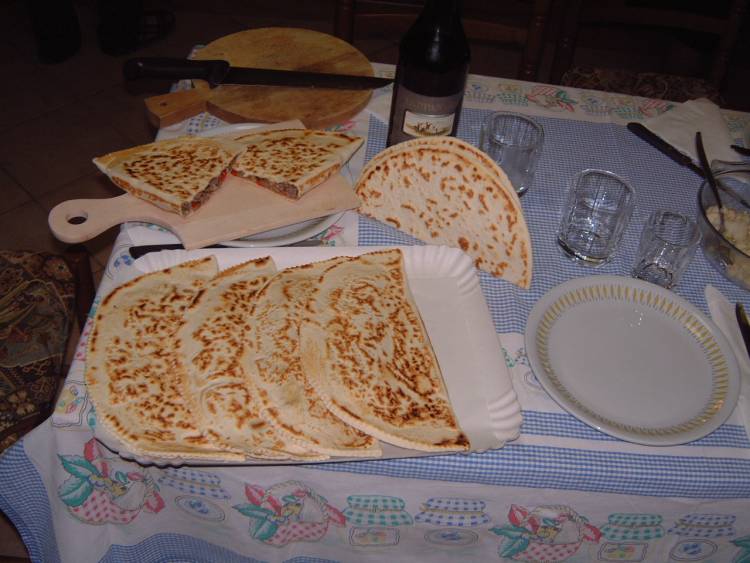
A piadina is opened, filled, folded, and eaten. A cassone is born already closed. The filling goes in before cooking, the dough is folded over, the edges are sealed, and the whole thing goes onto the griddle or hot plate. What comes out is a warm, compact, fragrant half-moon — often a bit scorching on the first bite if you’re too impatient.
That’s why many tourists don’t order it: they’re not quite sure what it is. They see the counter, read piadina, read cassoni, read crescioni, read herbs, chard, tomato and mozzarella, potato and sausage. Then they go for the piadina, because it’s the word they know.
Too bad. Because a well-made cassone is maybe the most Romagnola way to handle a quick lunch without feeling like you’re in some fast-food joint.
First things first: cassone, cascione, or crescione?
Let's start with the name, because this always gets a bit confusing around here.
In the Rimini area, you'll often hear cassone or cascione. Around Forlì and Ravenna, the same dish is more commonly called crescione. It's not something to settle with a ruler. Romagna changes words from one town to the next, and food often follows these invisible borders better than any map.
Here's the gist: we're talking about a dough similar to piadina, stuffed before cooking, folded into a half-moon shape, and cooked on a hot griddle. Ravenna Turismo explains it clearly: when piadina is filled and sealed before cooking, in Rimini it's called cassone, while in the Forlì and Ravenna area it becomes crescione.
The key detail is right there: before cooking.
Piadina arrives hot, then gets filled. Cassone already holds its filling inside. This changes everything. It changes the texture, the aroma, how the cheese melts, and the balance between dough and filling.
A cassone with tomato and mozzarella is not a piadina with tomato and mozzarella. It's a little warm pocket, with the tomato staying inside, the mozzarella stretching, the edge holding it all together, and the dough soaking up flavor as it cooks.
A cassone with greens is not a piadina with cooked vegetables. It's a piece of peasant cooking: greens, dough, griddle, hands. Few ingredients, but put together at just the right moment.
And that's something you truly understand in Rimini when you stop looking only at the sea and start noticing the habits.
Why many tourists don’t order it
The cassone doesn’t have the natural marketing that piadina does.
Everyone knows piadina. It’s on signs, in menus, in guides, in holiday photos. It’s almost become an automatic symbol: I go to Romagna, I eat a piadina.
The cassone, on the other hand, stays a step behind. Not because it’s less good. Quite the opposite. It stays behind because it needs a little explanation.
People coming from outside often think it’s a secondary variation. Something from the counter, to grab if there’s nothing else. Or they confuse it with a calzone, a stuffed focaccia, some generic street food.
In reality, the cassone has its own precise identity.
It’s more practical than piadina when you want to walk. It’s warmer. It’s more compact. It gets you less dirty if it’s closed well. It has a different relationship with the fillings. And above all, it brings you a Rimini that’s less like a postcard and more everyday.
The tourist orders piadina with prosciutto crudo, squacquerone, and rocket. The local, if short on time, often grabs a cassone.
Not always, not everyone, let’s not make folklore out of it. But it happens.
It happens during the lunch break, when you want something hot without sitting down for two hours. It happens after the beach, when you’re hungry but not ready for dinner yet. It happens in the evening, when you leave the center and look for something to hold in your hand. It also happens in winter, when the herb cassone has a different meaning: less holiday, more home.
That’s why, if you’re in Rimini for a few days, you should try it at least once. Not as a substitute for piadina, but as another path.
How a Cassone Is Made
A cassone starts with a simple base: flour, water, salt, fat. Traditionally lard, though today you’ll easily find versions with oil or lighter doughs. The kinship with piadina is obvious. No point denying it.
The difference comes after.
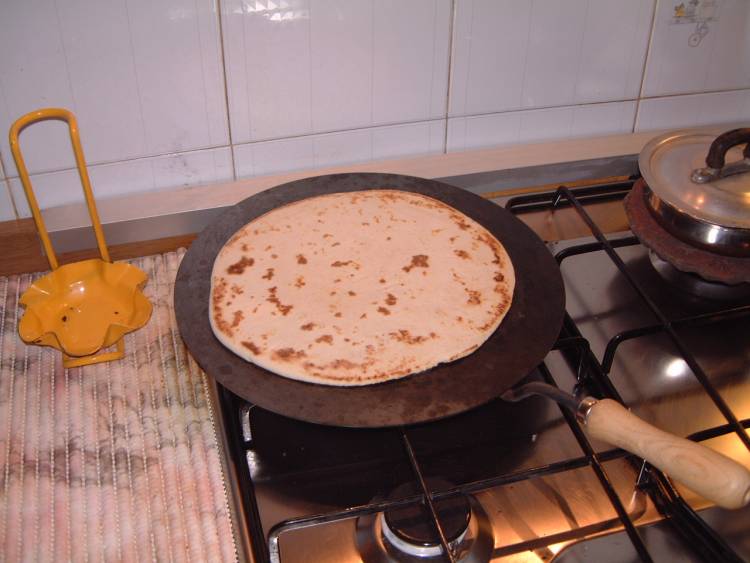
The dough is rolled into a thin disc. On one half goes the filling. Then it’s folded over, the edges are sealed, and it’s cooked. Sometimes the edge is pressed with fingers, sometimes with a fork. The result is that crescent shape that makes it recognizable.
The cooking is decisive.
If the griddle is too cold, the cassone stays pale and soft. If it’s too hot, it burns on the outside and doesn’t heat through properly. When it’s just right, the surface gets golden spots, the edge dries out, the filling firms up, and the dough stays tender but not rubbery.
A good cassone shouldn’t feel like a heavy pouch. It needs balance.
The filling should be there, but not burst out. The dough should hold up, but not take over. The bite should come clean. If it’s with herbs, you should taste the greens, not just salt. If it’s tomato and mozzarella, it should be stringy but not watery. If it’s potato and sausage, it should satisfy without turning into a brick.
I know, it sounds like a maniac’s concern. But when you live in a tourist town, you learn one thing: simple dishes are the ones that reveal the most.
With a complicated dish, you can hide. With a cassone, you can’t.
Fillings to Try in Rimini
The first cassone to try, in my opinion, is the herb one.
Not because it's the most photogenic. It isn't. Not because it's the easiest to sell to someone looking for something indulgent. Probably not. But because it best tells the story of the cassone's origins: a practical, farmhouse cuisine made of dough and vegetables, born from using what was on hand.
The herbs change from place to place. You might find chard, spinach, wild greens, rosole when it's in season, or simpler mixes. The beauty is right there: there's no single, preserved version.
A well-made herb cassone has a dry, green flavor, slightly bitter if the herbs allow it. It's perfect when you want to eat something typical without feeling too heavy.
The second is tomato and mozzarella.
Here, tourists feel safer, and that's fine. It's the most straightforward cassone, closest to comfort food. It appeals to anyone wanting something warm and stringy, but it's still more Rimini than any random choice.
But watch out: it has to be done right. The tomato shouldn't flood everything. The mozzarella shouldn't turn watery. The edge must seal. The filling should stay inside, not drip everywhere after two bites.
The third is potato and sausage.
Now we're in serious hunger territory. I wouldn't grab this before a long walk in the sun, but on a cool evening or after a day at the sea, it has its appeal. It's richer, fuller, more rustic.
Then there are variations with herbs and mozzarella, pumpkin and potato, mushrooms, eggplant, cheeses, cured meats. Every piadineria has its own habits. Some stay very traditional. Others have more fun.
My advice is simple: if it's your first time, don't start with the heaviest version. Start with herbs or tomato and mozzarella. Get to know the cassone. Then, eventually, on your second round, choose something bolder.
When to eat it
Cassone is one of those foods that just works because it doesn’t ask too much of you.
No need to book. No need to dress up. No need to plan your evening. No need to wait through a long menu. You order it, you get it hot, you eat it.
That’s why in Rimini it makes sense at so many different times.
At lunch, if you’re on the beach and want something more filling than a salad but less heavy than a restaurant meal. In that case, go for a simple filling—maybe greens or tomato and mozzarella—and don’t overdo it with the richer versions.
Late afternoon, when you’re back from the sea and have that strange hunger that’s not quite dinner but not just a snack anymore. Cassone becomes perfect here, especially if you then want to stroll along the seafront or head into the center without sitting down to eat right away.
In the evening, after a walk, when you want to eat something local without turning it into a long dinner. If you’re in Rimini for work, a fair, or a meeting, this is one of the most practical ways to feel like you’re in Romagna even if you only have an hour free.
And then there’s the after-beach.
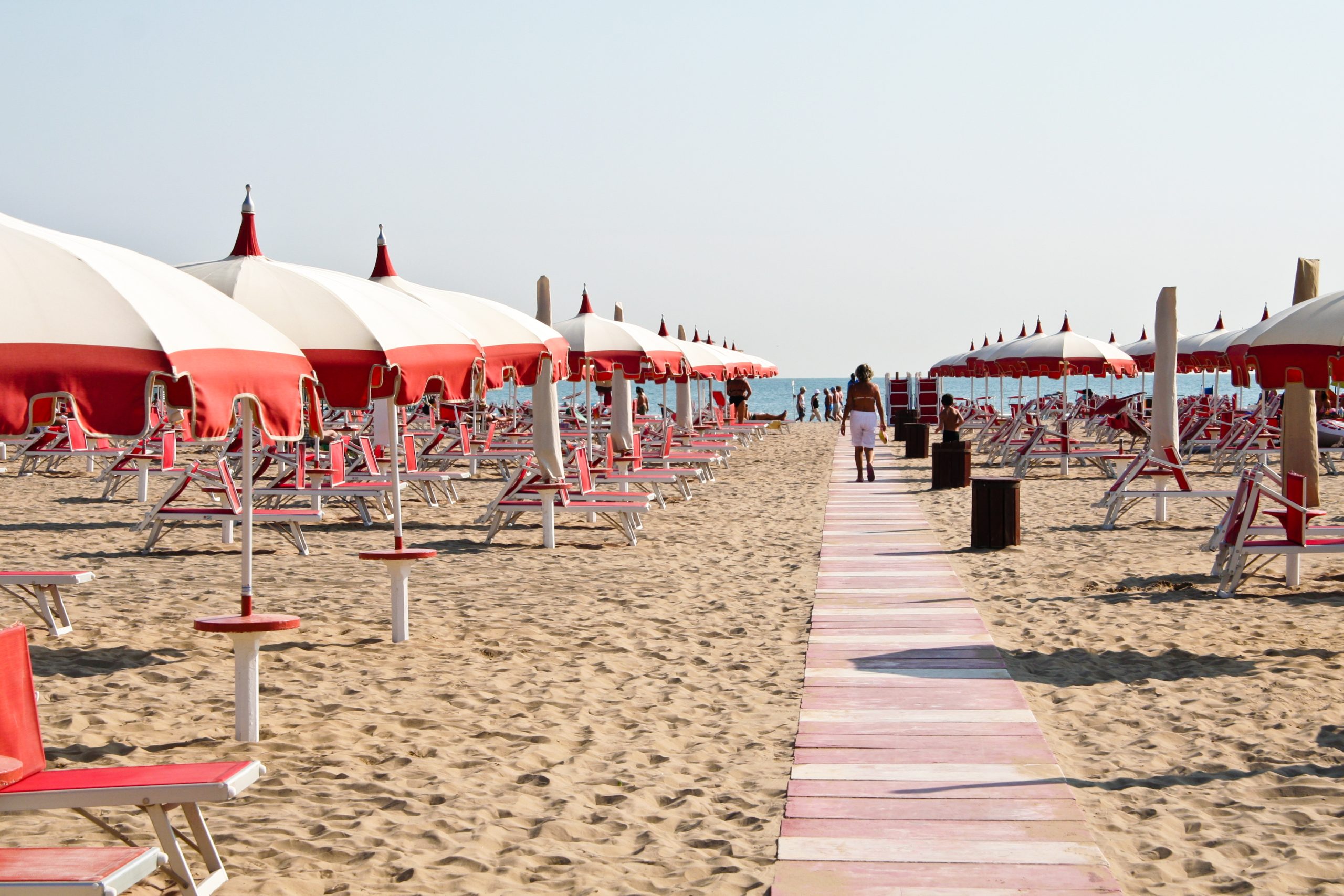
The after-beach in Rimini has its own geography. Shower, change, hair still salty, hunger, indecision. Restaurant? Aperitivo? Gelato? Piadina? In the middle of all that, cassone is a concrete answer.
It sets you right without forcing you to decide too much.
Where to find it without chasing famous names
I could give you the usual list of places here.
But this isn't that kind of article.
First, because places change. Second, because cassone is a food that doesn't live only in famous names. Third, because when you're on holiday in Rimini, you don't always need to know "the absolute best." You need to know how to spot a good choice near where you are.
Look for piadina shops that make cassoni to order or keep them rotating fresh. Watch the counter. See if the cassoni look lively, not sad. Ask which fillings they make most often. If they answer with confidence, that's already a good sign.
Be a little wary of endless menus where everything looks the same. Not on principle, but out of common sense. A cassone needs well-handled filling. If the menu has thirty variations but no identity, the result is often average.
Also pay attention to temperature. A lukewarm cassone can be good, but if it's meant to be eaten hot, it should arrive hot. Especially with mozzarella, potatoes, sausage.
And then ask.
Asking in Rimini isn't a tourist defeat. It's the fastest way to find the right thing. Ask: "Which cassone do you recommend if I don't want anything too heavy?" Or: "Which one is the most Rimini-style?" Often the answer is worth more than ten reviews you skimmed through.
Cassone and the beach: is it possible?
Yes, but with a bit of common sense.
The cassone is convenient, but it’s not always the best food to eat under the midday sun. It depends on the filling, the temperature, and how much you plan to move afterwards.
A herb-filled one can work well. Tomato and mozzarella too, as long as it’s not too heavy. Potato and sausage? I’d save that for cooler moments or a bigger hunger.
On the beach, the cassone has one advantage: it’s sealed. It doesn’t fall apart like an overstuffed piadina. It won’t leave crumbs everywhere, at least if it’s made well. You can eat it with less worry, especially if you’re on a break and don’t want to turn lunch into a complicated operation.
Still, it’s a warm food. And the heat in Rimini deserves respect.
If you’re here in July or August, I’d only choose it for lunch if you’re really hungry, and maybe pair it with something cool. If you’re here in June, September, or on a breezy day, it becomes much easier.
The point isn’t to set a rule. The point is to listen to the day.
Rimini, when you live it well, is also this: not eating the same thing the same way every time, but choosing based on the moment.
Il cassone for those in Rimini for work
Not everyone comes to Rimini on vacation.
Some are here for a trade fair. Some for a conference. Some for a meeting. Some are accompanying someone and find themselves with two free hours. Some work remotely and want to grab a bite without losing half a day.
For these people, il cassone is a much more interesting option than it seems.
Because it's quick, but not anonymous. It's local, but not demanding. It lets you have a real food experience even during a day packed with appointments.
Got a break between meetings? A cassone alle erbe and a short walk can be enough to feel outside the work bubble.
Finished late and don't want to sit down at a restaurant? A warm cassone, a glass of wine, a stroll toward the port or the seafront, and the evening changes mood.
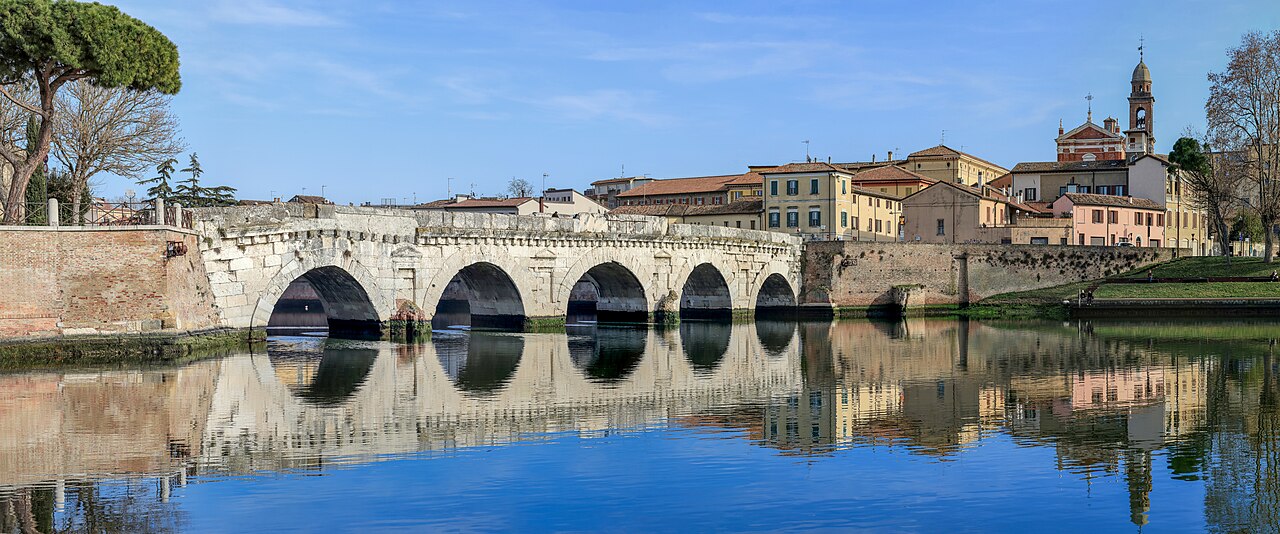
If you're staying in the Marina Centro area, you can use it as a simple dinner before heading out. If you're near the Palacongressi, it can be a quick break before heading back toward the sea. If you're in the historic center, you can pair it with a walk past the Arco d'Augusto, piazzas, and old streets.
It's not a fallback.
It's one of those small, smart adaptations that make a tourist city work even for those who don't have the whole day free.
How to order without getting it wrong
The first rule is don't overcomplicate things.
If you've never eaten a cassone, order the one with greens or tomato and mozzarella. They're the two simplest entry points.
The second rule is eat it slowly.
The cassone looks harmless, but inside it can be very hot. Especially if there's tomato or cheese. Wait a minute. There's no need to prove anything with the first bite.
The third rule is don't judge it just by its looks.
A greens cassone won't win a beauty contest. But it can be delicious. Romagna cuisine often isn't trying to impress you with aesthetics. It's aiming to make you say: "I'd have another one."
The fourth rule is look at the edge.
The edge tells you a lot. If it's well sealed, dry, cooked, with some grill marks, you're on the right track. If it's soft, open, pale, maybe less so.
The fifth rule is don't turn it into a competition.
You don't have to find the perfect cassone of your life. You just need to eat a good one, at the right moment. Street food works like this: atmosphere, hunger, temperature, company, a walk afterwards. Everything matters.
Cassone or piadina: which one to choose?
Choose piadina if you want something open, fresh, and customizable — maybe with cured ham, squacquerone cheese, and rocket, or with ingredients added after cooking.
Choose cassone if you want something warm, closed, more compact, with the filling cooked together with the dough.
Piadina feels more summery to many people. Cassone is more versatile. It works great even when the weather isn’t perfect, when it’s windy, when you feel like something that warms you up.
Piadina is sociable — you open it, look at it, stuff it. Cassone is more intimate. You hold it in your hand, bite into it, discover it from the inside.
They’re not rivals. They’re family.
And as often happens in families, the less famous relative has more character.
A Little Taste of Rimini
The cassone teaches you something useful about Rimini: not everything worthwhile is flashy.
The city is full of easy symbols. The beach, the piadina, the seafront, the Ferris wheel, the port, the old town, Fellini. All real, of course. But then there are smaller, more everyday details—less photographed.
The cassone is one of them.
It’s not a monument. It’s not an experience you book. It doesn’t need storytelling to exist. It’s simply something people here eat, know, order, and take away.
For a curious traveler, these details are precious.
Because they let you step out of the postcard without forcing you to become an expert. You don’t need to study the history of Romagna cuisine to enjoy a cassone. You just need to know it exists, order it right, and give it the time it deserves.
Then, if you want to dig deeper, you discover there are different names, different areas, doughs, herbs, habits, families, griddles, and skill behind it.
But you can also stop at the first level.
A warm cassone, eaten well, on a day in Rimini.
That’s already more than enough.
Informazioni pratiche
Where to find it: at Rimini’s piadina shops, in kiosks, and at many casual spots that make piadina and cassoni. You’ll find it by the sea, in the center, along busy streets, and in the most tourist-friendly neighborhoods.
How to order it: in Rimini, just ask for “cassone” or “cascione.” If you see “crescione” on the menu, don’t worry—in many parts of Romagna it means the same thing.
Best fillings to start with: greens, tomato and mozzarella, or greens and mozzarella. If you want something heartier, go for potato and sausage.
When to eat it: a quick lunch, after the beach, a casual dinner, or a break during a workday or fair.
Approximate price: it varies by spot and filling. Generally, it stays in the street-food range—more affordable than a restaurant dinner.
A note of caution: eat it slowly. The filling can be very hot, especially in versions with tomato and cheese.
FAQ
What’s the difference between piadina and cassone?
Piadina is cooked first, then filled. Cassone is filled before cooking, folded into a half-moon, sealed, and cooked on the griddle. The dough is similar, but the result is different.
In Rimini, do you say cassone or crescione?
In Rimini, it’s mostly called cassone or cascione. In other parts of Romagna, especially around Forlì and Ravenna, the name crescione is more common.
Which cassone should I try for the first time?
If you want the most traditional flavor, go for the herb one. If you prefer something more immediate and cheesy, choose tomato and mozzarella.
Is cassone good for a beach lunch?
Yes, especially the lighter versions. Since it’s closed and compact, it’s practical, but on very hot days it’s best to pick light fillings.
Is cassone vegetarian?
It depends on the filling and the dough. Herb and tomato-mozzarella can be vegetarian options, but always ask if the dough contains lard.
If you want to experience Rimini through these little things, pick a comfortable base and then move at your own pace. Sea, center, villages, piadinerie, walks: everything works better when you don’t have to rush.
You know where to find me. At Aqua Hotel.
If you are planning a day in Rimini
Cassone works well as a quick break: after the beach, during a walk, or when you want something local without sitting down for long.
- Piadina in Rimini, to understand the other great Romagna habit.
- Rimini Beach 2026, if you want to pair it with a seaside day.
- Rimini in a free morning, to place it between center and port.