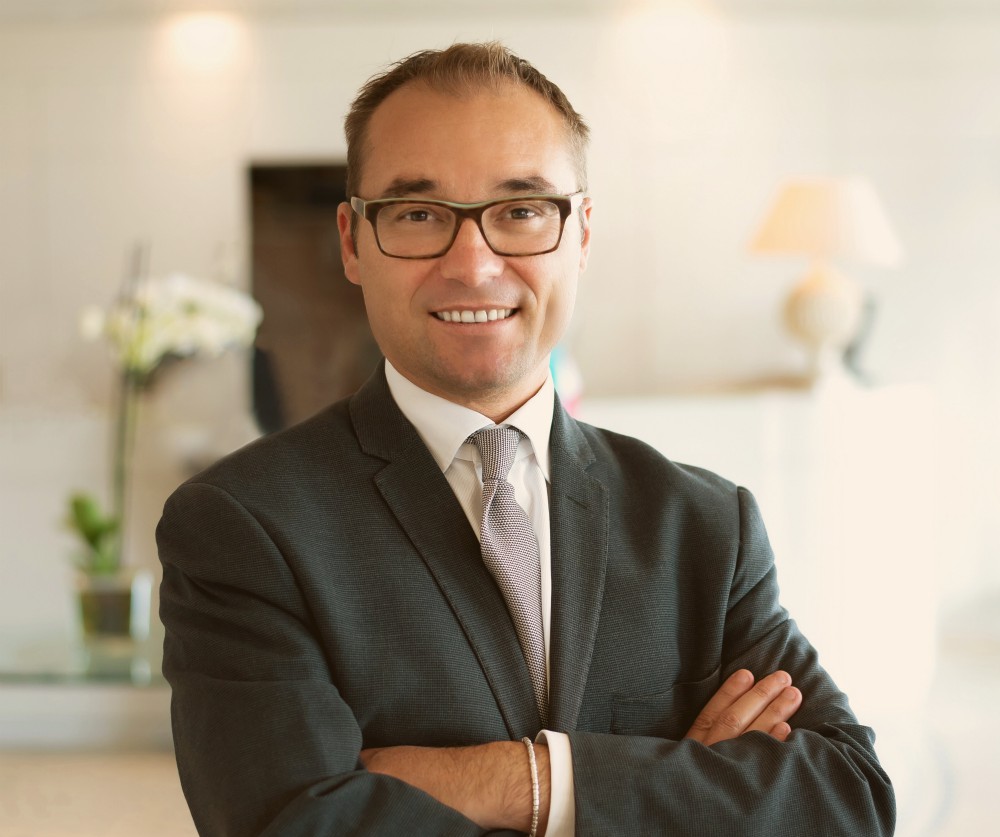
I’ve been working in tourism for over thirty years and I’ve seen Rimini change many times. But what’s happening with cycling mobility in recent years is something I wouldn’t have imagined even ten years ago. It’s not just about adding a few reserved lanes: it’s about completely rethinking how people move around this city.
And the numbers, this time, speak clearly.
The Rimini Bike Park: numbers that convince
Hidden beneath the Parco del Mare, the Rimini Bike Park is the most concrete proof that the city has stopped pretending to be bike-friendly and has decided to truly be one.
In 2024 it recorded:
- 60,000 accesses to the bike storage (+2,000 compared to 2023)
- 8,000 rentals (+25% compared to the previous year)
- 11,000 uses of the luggage storage service
- 27,000 users of the bar — now frequented well beyond the summer season
The facility offers parking for 160 bicycles, 70 spots with annual subscriptions, 10 charging stations for e-bikes, and a mechanical workshop open 7 days a week.
These aren’t the numbers of a seasonal tourist infrastructure. They are the numbers of a service that Rimini residents use all year round, summer and winter.
The Parco del Mare: the seafront you’ve always dreamed of
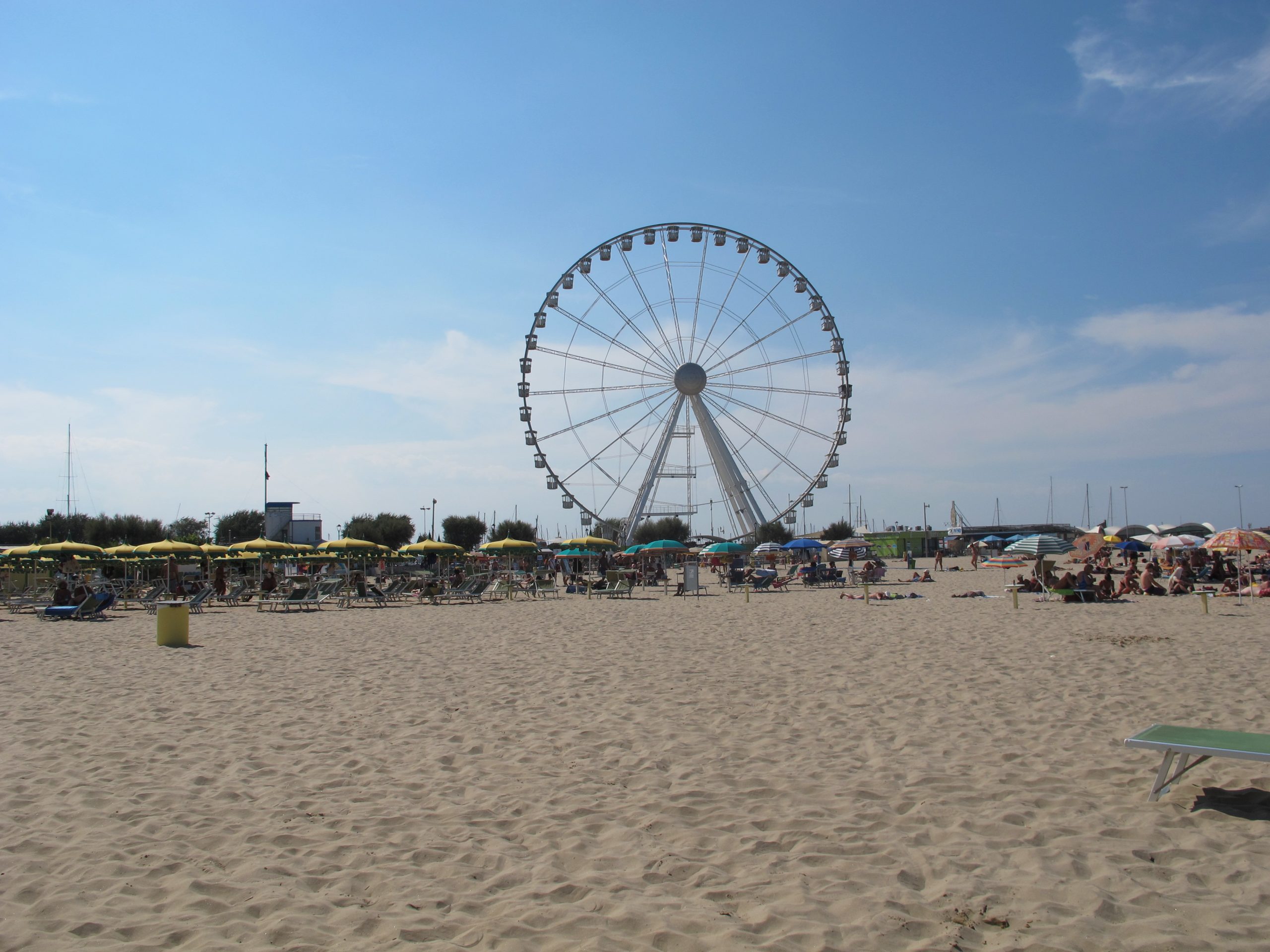
If you come to Rimini and go to the beach, you’ll immediately notice something is different compared to ten years ago. The cars have disappeared from the seafront. In their place: greenery, space, breathing room.
The Parco del Mare is the most ambitious urban regeneration project Rimini has seen in recent decades. A green and pedestrian corridor running parallel to the beach, designed for those who want to move slowly — on foot or by bike.
What you’ll find along the route:
- Continuous bike path, separated from traffic
- Wellness Tree in piazzale Kennedy: a 7-meter installation — a landmark of the largest open-air gym in the Mediterranean
- Foresta del Mare: an inclusive play area inspired by Gianni Rodari
- Outdoor gym with Technogym equipment
- Free Wi-fi, fountains, water features
- The Belvedere: panoramic terrace with water quality monitoring
No pointless concrete. No cars roaring two meters from your umbrella. The Parco del Mare is a slow space, designed for those who want to enjoy Rimini instead of rushing through it. Cycling along the seafront has become one of the most pleasant experiences I can recommend to anyone visiting for the first time.
Metromare: the electric thread connecting the coast
Few people know that Rimini has a transport line with no equal in Romagna. It’s called Metromare and it’s a bimodal electric trolleybus — powered by the grid where it exists, by batteries on other sections — running parallel to the coast.
The first operational section connects Rimini to Riccione in 23 minutes, over 9.8 km with 15 intermediate stops. The frequency is 10 minutes. Extensions toward Rimini Fiera (4.2 km) and Cattolica (7.5 km) are already planned.
What I love most about Metromare is this: you can bring your bicycle on board. And at the main stops you’ll find bike stations and bike sharing.
This means a tourist can arrive by train in Rimini, rent a bike, use it on the Parco del Mare, hop on Metromare with the bike to move toward Riccione, return to the Bike Park in the evening, and drop it off. Without touching a car. Without looking for parking. Without stress. It’s an integrated system — it took us years to get there, but we made it.
Velo-city 2026: Rimini world cycling capital
In 2026 Rimini will host Velo-city, the world summit on urban cycling organized by the European Cyclists’ Federation. It’s the reference conference for urban planners, administrators, designers, and activists working on sustainable mobility worldwide.
That Rimini was chosen is no coincidence. Over the past five years, the cycling network has grown from 123 km (2020) to over 135 km (2025), with new regional funding already allocated for three additional connections: Pomposa, Aquario, and Turchetta — which will further link the sea, city, and hinterland.
Rimini isn’t hosting Velo-city because it’s already perfect. It’s hosting it because it’s in the middle of a real, measurable, visible transformation. And that, for an international conference, is much more interesting than a city that has already finished growing.
A route I recommend
If you have two hours and a bike, here’s the ride I would take:
- Start from the Bike Park (piazzale Fellini) — rent a bike if you don’t have one
- Cycle along the Parco del Mare northward, up to piazzale Kennedy — about 2 km of separated path with the sea on your right
- Stop at the Wellness Tree — worth a photo
- Head back toward the center and aim for the Porto Vecchio — Borgo San Giuliano is a 10-minute bike ride from the beach
- Go up to the historic center and arrive at Piazza Cavour — that’s where you understand Rimini is not just beach
- Return to the Bike Park along viale Vespucci
Total: about 8–10 km, zero traffic for at least 6, suitable even for those who don’t cycle often.
FAQ — Frequently asked questions about Rimini by bike
Where is the Rimini Bike Park located?
It’s in piazzale Fellini, under the Parco del Mare. Accessible on foot from the central beach or from the station, about a 15-minute walk away.
Can I rent a bike directly at the Bike Park?
Yes. The rental service is available at the Bike Park and grew by 25% in 2024. Electric bikes with dedicated charging points are also available.
Does Metromare accept bicycles on board?
Yes, you can bring your bike on Metromare. At the main stops you’ll also find bike stations and bike sharing services.
How long is Rimini’s cycling network?
Today it exceeds 135 km, with new sections under construction. In 2020 it was 123 km: the growth is steady.
Can you cycle on the Parco del Mare even in winter?
Absolutely yes. The Parco del Mare is open all year round and the Bike Park records visitors even off-season. The seafront in winter has a completely different charm — and much less traffic.
What is Velo-city 2026 and what does it mean for Rimini?
Velo-city is the world’s leading summit on cycling mobility, organized by the European Cyclists’ Federation. Rimini will host it in 2026: it’s a recognition of the city’s urban transformation journey in recent years.
Rimini is changing. Not in the press release sense, but in the sense that you can feel it under your wheels as you cycle along the seafront at eight in the morning with the sun rising over the sea.
You know where to find me. At Aqua Hotel.