The Gambalunga Civic Library in Rimini holds two original globes by Willem and Joan Blaeu, dating from 1622 and 1640. They are among the rarest 17th-century cartographic artifacts in the world. Admission is free.
Some things are right in front of everyone, and nobody sees them.
Rimini has a library. Not one of those modern libraries with neon lights and plastic chairs. A library founded in 1619 by a Rimini nobleman named Alessandro Gambalunga, who decided, before he died, to leave his entire book collection to the city.
Inside that library — via Gambalunga 27, steps from the city center — there are two globes.
One represents the Earth. The other, the sky.
They were made by the Blaeu family, the greatest cartographic house of the 17th century.
Who Was Blaeu — the Cartographer Who Drew the World
Willem Janszoon Blaeu was Dutch, son of a herring merchant, who became the most important cartographic publisher in Europe. Amsterdam, late 1500s: the Dutch were building a commercial empire stretching from Brazil to the East Indies. Dutch ships were circumnavigating the globe. And someone had to draw that globe, so the ships would know where to go.
Blaeu was that man.
He had studied astronomy under Tycho Brahe — the same scientist who had taught Kepler. He knew how to build precision instruments. He knew how to chart the stars. His globes were sold in pairs: one terrestrial, one celestial. They were bought by kings, cardinals, and universities. They were the symbol of the knowledge of their time: whoever owned a Blaeu globe owned the world.
1622 and 1640: The Dates of Rimini’s Globes
The terrestrial globe dates from 1622, made by Willem at the height of his career. On its surface: the coastlines that explorers had just finished tracing — the Americas, Africa, the routes to the East Indies. Places that were permanently changing the map of the world.
The celestial globe dates from 1640, completed by Joan Blaeu, Willem’s son, after his father’s death in 1638. It shows the constellations — Orion, Leo, Virgo, Cygnus — drawn with the precision of someone using telescopes and astronomical tables, not myths.
Two objects built twenty years apart, now together in a room in Rimini.
Why They Are Rare
Blaeu globes were expensive even in 1600. Over the centuries, most were lost — to fires, wars, relocations, neglect. Complete pairs (terrestrial + celestial) have survived in very few examples worldwide. Today they are found mainly in major national museums in London, Amsterdam, and Vienna.
Rimini has two.
Not in a climate-controlled case in Paris. Not behind bulletproof glass in Amsterdam. They sit in a civic library in a provincial Adriatic coast city, in a room open to anyone.
What Strikes Me
I’ve lived in Rimini my whole life. I’ve accompanied hundreds of guests around this city. I’ve answered a thousand times the question “what is there to see in Rimini besides the sea?”
I never said: go see the Blaeu globes.
Not because it wasn’t worth it. Because I didn’t know.
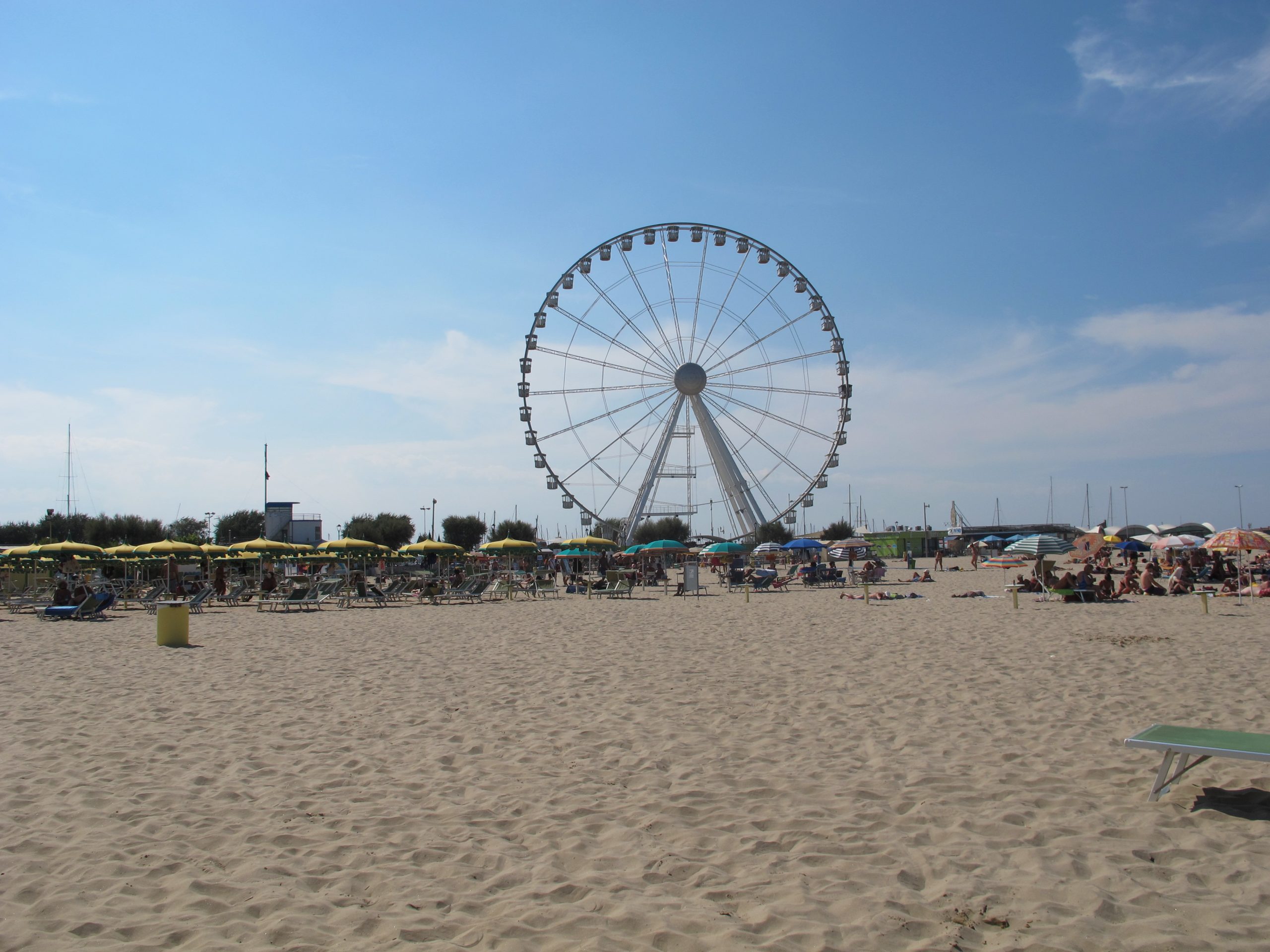
And most people who walk past the Gambalunga every summer probably don’t know either — they glance at the 17th-century façade and head toward the seafront.
Inside are the eyes through which the 17th century saw the world. Two spheres that have crossed four hundred years to end up on that street. They’re still there.
How to Visit the Blaeu Globes in Rimini
The Gambalunga Library is at via Gambalunga 27, Rimini, in the heart of the historic center, ten minutes from the Arch of Augustus. Admission is free. To access the historical collections and rare pieces like the globes, it is advisable to contact the library in advance.
If you’re looking for a place to start exploring this Rimini — the one that doesn’t end on a postcard — you know where to find me. At the Aqua Hotel.
Frequently Asked Questions About the Blaeu Globes in Rimini
Where are the Blaeu globes in Rimini?
The Blaeu globes are kept at the Gambalunga Civic Library, via Gambalunga 27, in the historic center of Rimini.
What are the Blaeu globes?
They are two original 17th-century cartographic spheres — one terrestrial (1622) and one celestial (1640) — produced by the Dutch Blaeu cartographic workshop, the most important in Europe in the 1600s.
Who built the Blaeu globes?
The terrestrial globe (1622) was made by Willem Janszoon Blaeu. The celestial globe (1640) was completed by his son Joan Blaeu after his father’s death in 1638.
Why are the Blaeu globes important?
They are among the rarest cartographic artifacts of the 17th century. Complete surviving pairs (terrestrial + celestial) are extremely few worldwide and are found almost exclusively in major national museums.
Can you visit the Blaeu globes in Rimini?
Yes, the Gambalunga Library is open to the public with free admission. To see the historical pieces such as the globes, it is advisable to contact the library in advance.
How far are the Blaeu globes from Rimini beach?
The Gambalunga Library is in the historic center, about 3 km from the beach — roughly 10–15 minutes by car or bike.