Porta Galliana: Rimini’s Secret Gateway Hidden for Centuries

Three metres and twenty-five centimetres below street level.
That is the distance separating the Rimini you walk through every day — the one of scooters, morning coffees at the bar, tourists glued to their GPS — from another city entirely.
Buried. Forgotten. Guarded by a Gothic arch in Covignano sandstone.
This is not a crypt. Not a cellar. Not just another relic of a city dragging its rubble through the centuries.
This is Porta Galliana. The only surviving medieval city gate in Rimini.
And for centuries — centuries — no one knew it was there.
Under our feet. Under our lives. Under the daily noise of a city that had no idea it was sitting on a treasure.
Think about that. How many times have you walked over something precious without knowing it? How many times has history been working in silence while you looked the other way?
Now — finally — we can listen.
An Arch That Knew Things We Forgot
Thirteen hundred. The 13th century. The age of Frederick II, the Holy Roman Emperor who strode across Italy with his court of poets, falconers, and architects. The man who astonished the world.
In those years, Rimini builds. Not churches. Not palaces. Walls.
The city closes itself off. Defends itself. Becomes a fortress. The medieval walls — thick, tall, armed. And in those walls, gates. Controlled passages. Mandatory crossing points. In the case of Porta Galliana — access to the river.
Because Porta Galliana was not just any gate. It was the link between the walled city and the port on the Marecchia River. The commercial artery of a Rimini that traded, trafficked, and breathed through that river.
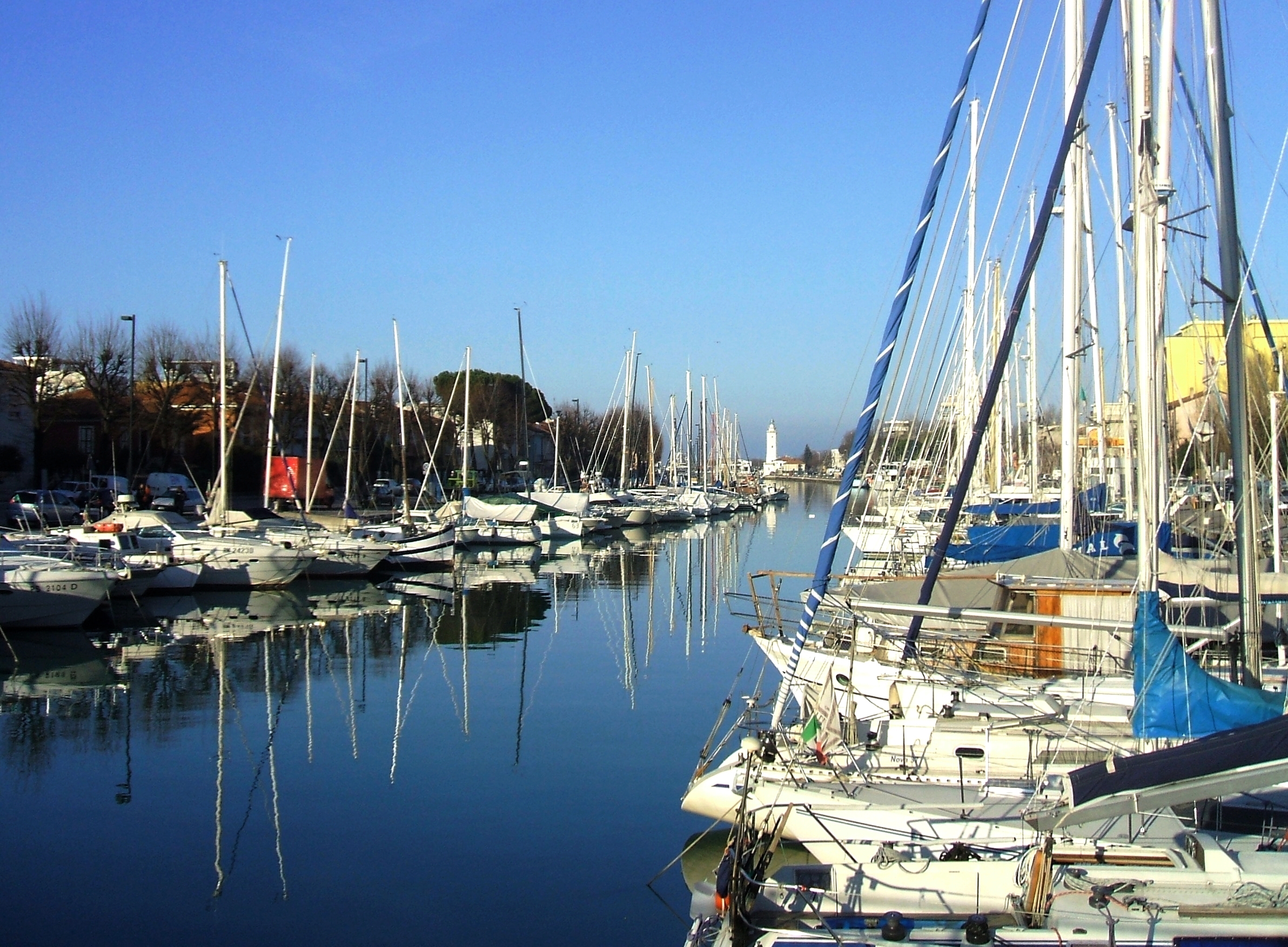
Today Rimini’s port is the Canal Harbour. Boats, restaurants, the nightlife of San Giuliano. But seven hundred years ago the port was different. It was fluvial. It was the Marecchia itself. Cargo boats came up the river. Goods. People. Stories. The river port was the city’s commercial and military hub.
And Porta Galliana was the key to all of it.
Through this gate you passed to reach Borgo di Marina. The fishermen. The goods unloaded on the riverbanks. All of what a port city produces when it breathes through its harbour — brothels for sailors, transit inns, strange languages, the smell of fish and tar and adventure.
The real Rimini began there. And Porta Galliana was the entrance.
The Lord of the Gates — Sigismondo’s Touch
The 15th century. Sigismondo Pandolfo Malatesta. The lord of the city. The condottiero. The patron who built the Tempio Malatestiano.
Sigismondo looks at the walls of his city and they are not enough. He wants them stronger. More modern. Capable of resisting cannons and professional armies. So he intervenes.
Porta Galliana is restored. Strengthened. Integrated into the city’s new defensive system. Sigismondo does not tear it down. He renews it.
But here is the detail that makes you stop.
In 1438, Filippo Brunelleschi visited the Malatesta fortifications. The architect who had just solved the impossible problem of covering a 42-metre dome in Florence walked along our walls. He studied our fortifications. He looked at Porta Galliana with the eyes of a genius.
There is no proof that he worked on it. But the idea that he laid eyes on that portal — on that Gothic arch — ties Rimini to the great Florentine Renaissance with a thin, invisible, real thread.
The Bas-Relief in the Temple — Agostino di Duccio’s Signature
Inside the Tempio Malatestiano — Rimini’s cathedral — there is a bas-relief. Created between 1449 and 1455 by Agostino di Duccio. It depicts Porta Galliana.
Not an idealized gate. The real one. Portrayed while it still existed. A portrait in stone. That is how we know what it looked like. Through the eyes of a 15th-century sculptor who fixed it in stone before it disappeared.
For centuries, the only way to see Porta Galliana was that bas-relief in the Temple. Until 2022.
Closed, Buried, Forgotten
The 16th century. Things change. Wars change. Cities change. Porta Galliana is closed. In its place, the Torrione dei Cavalieri rises. New. Sturdy. Modern.
The old gate is filled in. Covered. Forgotten. Three metres and twenty-five centimetres below the street. For nearly five hundred years, Rimini walks over it. Carts. Bicycles. Cars. The city grows, builds the new port, the railway station, the grand hotels. And below, the gate sleeps.
No one sees it. No one looks for it. It becomes a legend for a few scholars. A note in a dusty archive. A drawing in a forgotten drawer.
And then — in the silence — something moves.
1908 — The First Resurfacing
Early 20th century. Rimini has turned its back on its medieval past. It looks to the sea, to tourism, to the future. But sometimes the past knocks.
1908. During ordinary excavation work, something emerges from the earth. A deposit of bronze medals. Malatesta medals. Dated 1450. Minted during Sigismondo’s reign, hidden by someone in a hurry who never returned to retrieve them.
The same year, from the same excavations, a public washhouse emerges. A structure proving that the area was still alive, still frequented. Women washing clothes. Children playing. Life continuing above the buried gate.
But the real gate — the arch, the medieval structure — remained underground. Its time had not yet come.
The Long Sleep — A Complex Defensive System
Professor Rimondini spent years reconstructing the “forma urbis” of medieval Rimini — the shape of the city as it was. And Porta Galliana’s story is also the discovery of a much more complex defensive system than one might imagine.
It was not just a gate. There was a false wall. A barbican. Low defensive walls running parallel to the main circuit. Military architecture of the highest level.
And beside it stood two other gates: Porta dei Cavalieri (also called San Giorgio or Marina) and Porta San Cataldo (also called San Domenico). Three passages to the river. Three stories, of which only one survives.
Why Porta Galliana? Perhaps because it was more hidden. Deeper. More stubborn. Like certain memories that never quite go away.
2022 — The Awakening
2017. Work begins. The Municipality of Rimini launches a project to recover the archaeological area. Five years of excavations, studies, consolidation.
Then, finally, 2022. Porta Galliana reopens. For the first time in five hundred years, the 13th-century gate sees the light. The people of Rimini can walk beside it. Touch it. Enter that Gothic arch in Covignano sandstone.
Descending those three metres and twenty-five centimetres, the noise of the city fades. Seven hundred years of history stare at you.
The excavations also unearthed the remains of the drawbridge. A drawbridge in Rimini. Picture that scene: ropes, wood rising with a creak, the water of the moat below reflecting the light.
Today, Porta Galliana is open to visitors. Free entry. Connected by a cycle-pedestrian path to the Lighthouse and the Canal Harbour. You can cycle there, walk there, bring your children to see a gate that has seen seven hundred years pass by.
Three metres and twenty-five centimetres below street level. Yet — in a way — taller than any building. Because height, sometimes, is not measured in metres. But in years.
How to Get There — Practical Info
Porta Galliana is in the San Giuliano district, steps from the Canal Harbour. Follow the path from the Lighthouse towards the bridge. The archaeological area is free to enter, about 3.25 metres below street level.
On foot: from the historic centre, cross the Tiberius Bridge and head towards San Giuliano (15–20 minutes). By bicycle: the cycle path connecting the Lighthouse to the Canal Harbour passes right by. By car: park in the San Giuliano area or at the Canal Harbour.
A tip from a friend: go unhurried. Stand there. Look at the arch. Try to imagine what it was like seven hundred years ago. Close your eyes. Smell the river. The wet wood. Then open them. You are still in Rimini — but it is another Rimini.
Why It Matters
Rimini is not just the beach. Not just the nightlife. Not just clubs and umbrellas. Rimini is layered. Century upon century. Under your feet, there is a city that fought wars, built empires, welcomed popes and emperors.
Porta Galliana is the symbol of this hidden Rimini. Proof that you come here not just to tan, but to discover. To walk where emperors and architects walked. To touch the same stone Frederick II’s soldiers touched.
Three metres and twenty-five centimetres. A ridiculous distance. Yet, when you descend, you cross seven hundred years.
Every time I think I know this city well, she surprises me. Rimini is an open book that never stops amazing. Porta Galliana is one of its most beautiful chapters — closed for centuries, now reopened. Like a gift the city gave to itself.
If one day you come to see with your own eyes, I will be waiting. Two steps away.
Frequently Asked Questions about Porta Galliana
Where is Porta Galliana located in Rimini?
Porta Galliana is located on Via Bastioni Orientale, just a few steps from Rimini’s historic center. It is a pedestrian passage that today connects the city center to the port area.
Can you visit Porta Galliana?
Yes, Porta Galliana is open at any time. It is a public outdoor passage, free to access. Visiting during daylight hours is recommended to better appreciate the medieval structure details.
How tall is Porta Galliana?
The gate sits about three meters and twenty-five centimeters below the current street level. This depth is due to the continuous raising of the ground level over the centuries following its construction.
Why is it called Porta Galliana?
The name probably derives from the road that led to Gaul (ancient France). According to some theories, it was the gate through which pilgrims heading north along the Via Emilia used to pass.
Is Porta Galliana open to the public?
Yes, it is a public pedestrian passage. You can walk through it freely and touch the 13th-century stone with your own hands.
You know where to find me. At the Aqua Hotel.