If the walls of Teatro Galli could talk, they would tell you a surprising story scented with freshly baked bread.
A different scent. Very different from the one you smell today when the curtain rises.
Let me take you back in time, to an era when this building had a completely different role in the lives of Rimini’s people.
Centuries have passed.
The scent of bread has vanished into the air, but the memory of those public ovens still lives within these majestic walls that today host operas and concerts.
Close your eyes for a moment.
Imagine the lines of people waiting for their turn to buy bread, right where the theater foyer stands today.
Can you smell it in the air?
That’s history speaking to us.
Fate sometimes has strange plans.
This place was born to nourish the body and has become a space where the soul is now fed through art and music.
It’s an evolution that tells the very story of our city.
On one side, the simple scent of bread that fed the people of Rimini; on the other, the modern aromas that now mix among the golden balconies.
It’s a story that always surprises. A transformation no one could have imagined.
But this is only the first page of an incredible tale.
Now, let me tell you the rest.
RIMINI IN THE 1700s
Have you ever wondered how people in Rimini lived in the 18th century?
When I pass in front of Teatro Galli, I like to imagine those same streets in a time when hunger was a daily concern.
You see, as a hotel director, every day I tell my guests about the wonders of Rimini.
And this is one of the stories I love the most: right where the majestic Teatro Galli now stands, there were once people ensuring that everyone in Rimini had bread to eat.
Close your eyes again for a moment.
We’re in the heart of the city, just steps from the main square.
A large building with several ovens working at full speed.
The air is filled with the aroma of freshly baked bread.
Lines of people wait for their turn while smoke rises from the chimneys into the sky.
These weren’t just any ovens.
They were the forni camerali, established by the Papal government for a specific reason: to regulate the price of bread during times of famine.
In simple words, to stop prices from skyrocketing when grain was scarce.
The location was not chosen by chance.
A few steps from the port, near the main roads—right where the city pulsed the strongest.
Today, when you pass by Teatro Galli, you’d hardly imagine that those same walls once safeguarded Rimini’s bread.
THE REVOLUTIONARY VISION
But why did the “forni camerali” become a theatre?
Do you know what it takes to change the face of a city? A vision.
In 1843, the arrival of architect Luigi Poletti changed everything.
There was an ongoing debate among the people at the time about how to build the theatre.
The city was divided.
On one side were the conservatives who wanted to keep the ovens, on the other the visionaries dreaming of a theatre worthy of the great European cities.
Imagine the heated discussions in cafés, piazzas, noble salons.
“A theatre? And where will we bake the bread?” some protested. “Rimini deserves more than just being the city of bread,” others replied.
Poletti arrived like a whirlwind of fresh ideas.
He wasn’t just any architect: he had already designed important works in Rome.
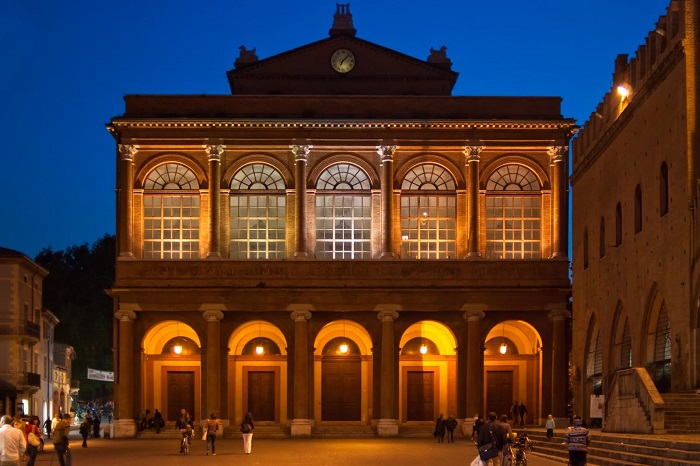
And when he saw that space in the heart of Rimini, he had a clear vision: a majestic theatre in pure neoclassical style that could compete with Italy’s most prestigious theatres.
The decision to demolish the ovens was bold, almost reckless.
But you know what Poletti used to say? “We’re not just building a theatre, we’re creating Rimini’s future.”
He was right. His design included monumental columns, an elegant foyer, and a theatre hall with perfect acoustics.
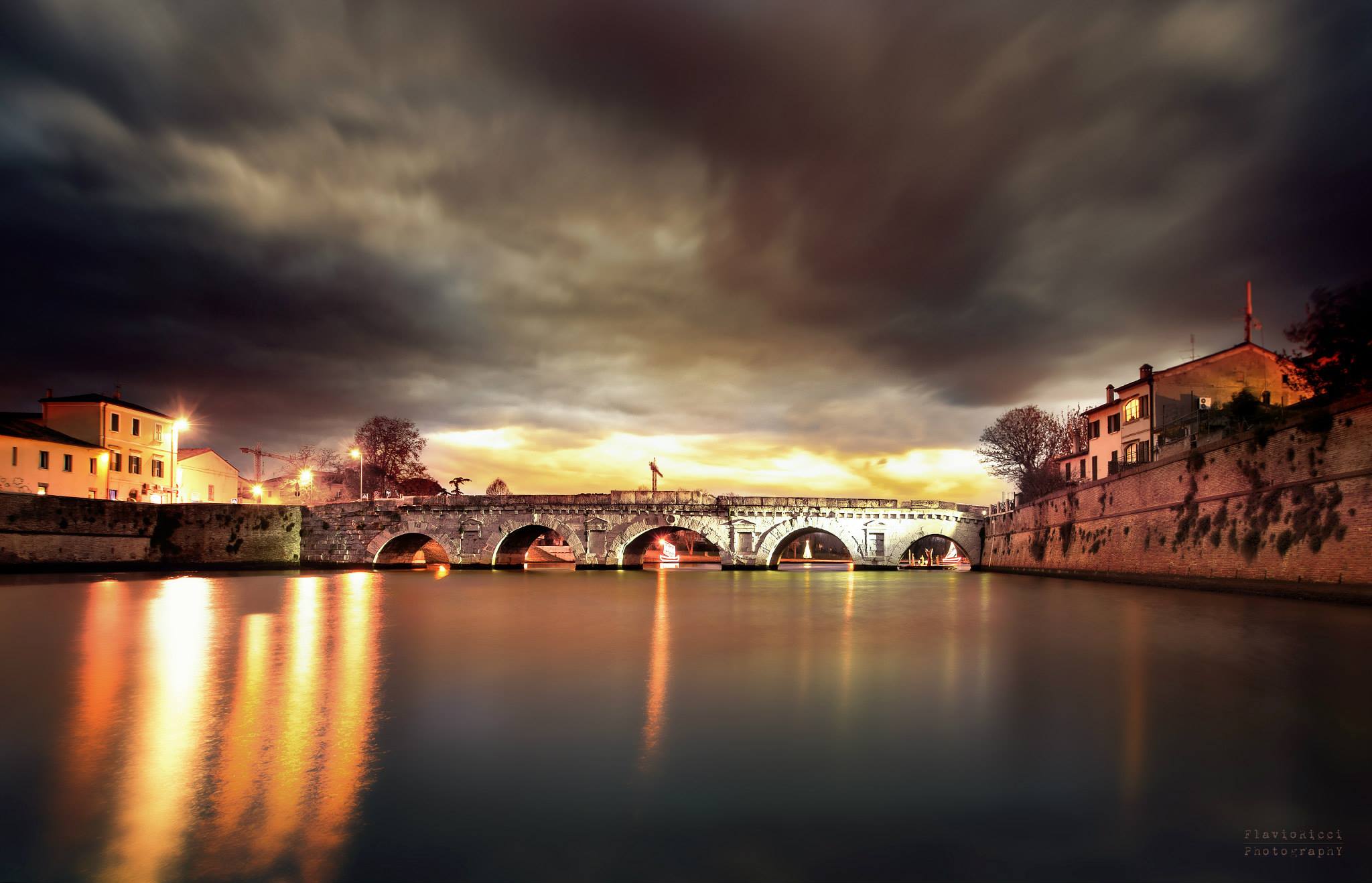
Every detail was studied to converse with the city’s other monuments: the Arch of Augustus, the Tiberius Bridge, the Malatesta Temple.
And while drawing his masterpiece, Poletti was actually sketching the cultural future of Rimini.
A future that still amazes my guests when I tell them this story.
But the best was yet to come.
THE REVOLUTIONARY VISION
But why did the communal ovens become a theater?
Do you know what it takes to change the face of a city? A vision.
And in 1843, the arrival of architect Luigi Poletti in the city changed everything.
There was a debate among the people of the time about how to build the theater.
The city was divided.
On one side were the conservatives who wanted to keep the ovens, while on the other side were the visionaries who dreamed of a theater on par with the great European cities.
Imagine the heated discussions in cafés, squares, and noble salons.
“A theater? Where will we make the bread?” some protested. “Rimini deserves more than just being the city of bread,” others replied.
Poletti arrived like a whirlwind of fresh ideas.
He was no ordinary architect: he had already designed important works in Rome.
And when he saw that space in the heart of Rimini, he had a clear vision: a majestic theater, in pure neoclassical style, that could compete with the most prestigious Italian theaters.
The decision to demolish the ovens was courageous, almost reckless.
But you know what Poletti said? “We are not just building a theater, we are creating the future of Rimini.”
He was right. His project included monumental columns, an elegant foyer, and a theater hall perfect for acoustics.
Every detail was designed to engage with the city’s other monuments: the Arch of Augustus, the Tiberius Bridge, the Malatesta Temple.
And while he was designing his masterpiece, Poletti was, in fact, designing Rimini’s cultural future.
A future that continues to amaze my guests when I tell them this story.
But the best is yet to come.
THE METAMORPHOSIS
For fourteen years, Rimini lived through the most ambitious construction project in its history.
From 1843 to 1857, hundreds of workers worked to transform the old ovens into the Galli Theater.
The project was clear: to create the most modern theater in Italy.
The workers demolished the ovens piece by piece.
In their place, the foundations of the new theater made their way into the ground of Rimini.
The columns were the first to rise.
Eight meters of white marble, sculpted by master stonemasons who came especially from Carrara. Every day, the construction site attracted curious onlookers who stopped to watch the theater grow.
The foyer was the first space to take shape.
An environment designed to welcome 800 people, with ceilings 12 meters high, decorated with golden stucco.
The best artisans from Rimini worked for months on these details alone.
The main hall was a technical challenge.
Architect Poletti wanted perfect acoustics.
He studied theaters all over Europe and created a horseshoe-shaped hall with four levels of boxes.
Every angle was calculated to make the sound bounce in the right way.
On August 16, 1857, the debut moment arrived.
The theater was ready.
Gas lamps illuminated the façade.
The orchestra took its place.
Giuseppe Verdi had personally chosen this theater for the premiere of his Aroldo.
That evening, 800 Rimini residents crossed the threshold of the theater.
They sat in boxes still smelling of fresh paint.
They watched the new curtain rise for the first time.
The first notes of the orchestra filled the room.
The sound was perfect, just as Poletti had promised.
Rimini had its theater.
But the story doesn’t end here.
THE WITNESS OF TIME

The Teatro Galli has not finished amazing us.
Every evening, its lights turn on, illuminating the heart of Rimini like a lighthouse in the night.
Seventy-five years of silence were not enough to extinguish its voice.
But this theater holds an incredible secret.
During recent restoration work, the workers made a discovery that left everyone breathless.
Beneath the stage slept an ancient treasure.
The remains of a Roman domus.
Perfectly preserved mosaics. Floors that tell two thousand years of history.
Time has stopped here.
In this extraordinary place, different eras intertwine: from the bread of the 18th-century ovens to Verdi’s arias, from Roman mosaics to today’s applause.
Pause for a moment in front of its majestic columns.
Look up at the facade that has seen generations of Rimini residents pass by.
How many stories have been woven here? How many dreams have been born on that stage?
It’s not just a building of stone and marble.
It’s the beating heart of our city, the living proof that beauty can transform a place and the people who inhabit it.
Do you want to be part of this story?
The magic of the Teatro Galli awaits you. This summer, give yourself a unique experience: come to Rimini and let yourself be enchanted by its millennia-old stories.
From the sea to culture, from history to art. Some experiences cannot be told. They must be lived.
[Book your stay now: link to Aqua Hotel’s special offers]